Tips from the Field
Agronomy Update | Flea Beetles
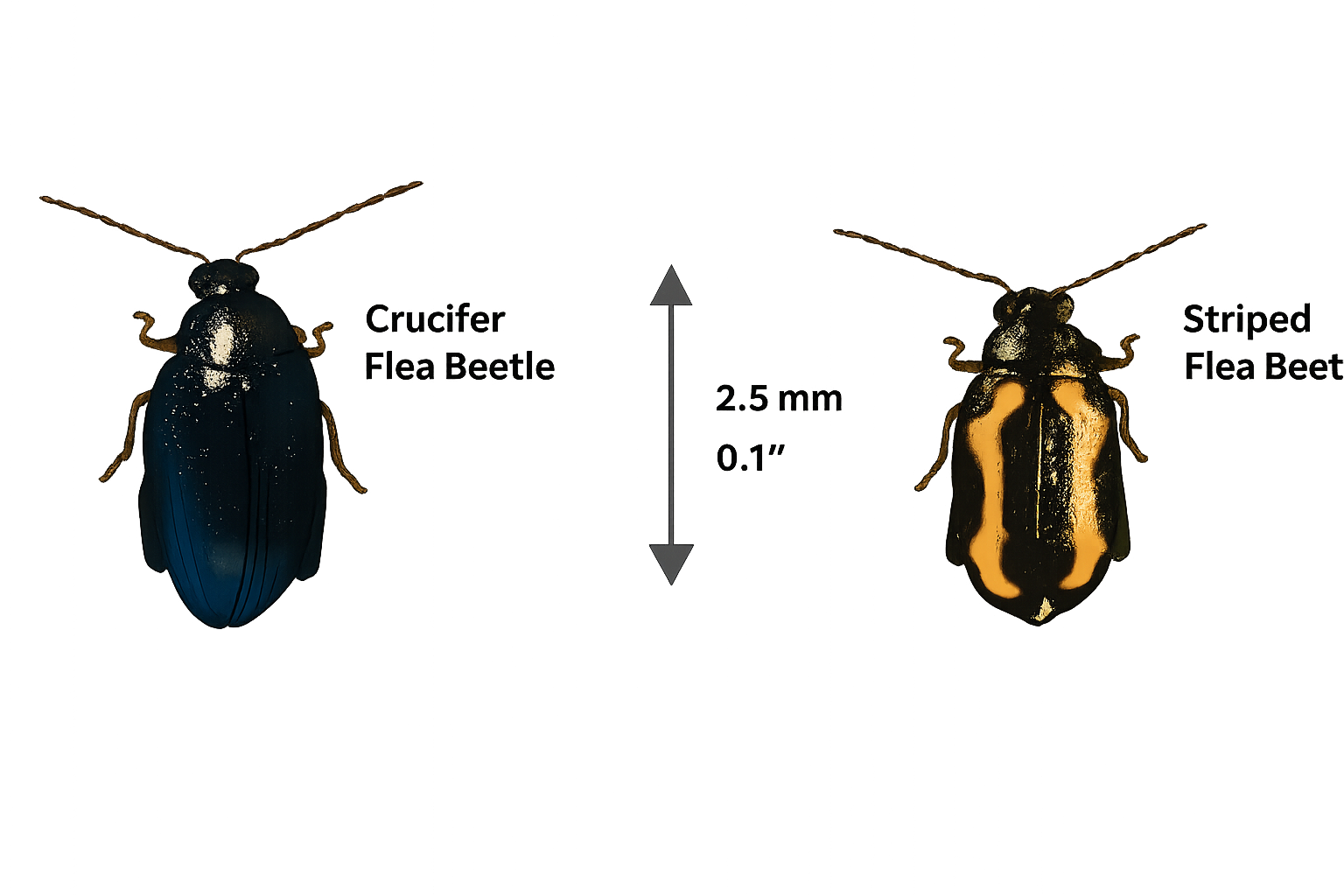
Scouting early for insects is essential, since flea beetles and cutworms can significantly reduce canola yields. Keeping a close eye on crops from emergence to the four-leaf stage helps maintain yield into the season. Two primary flea beetle species impact canola crops: Crucifer and Striped flea beetles. It is important to note that striped flea beetles typically emerge one to four weeks earlier than crucifer flea beetles. Crucifer flea beetles become active once soil temperatures reach approximately 15°C. Both species overwinter as adults in grassy areas, shelter belts, and field margins, and emerge to feed on canola seedlings early in the growing season.
Scouting
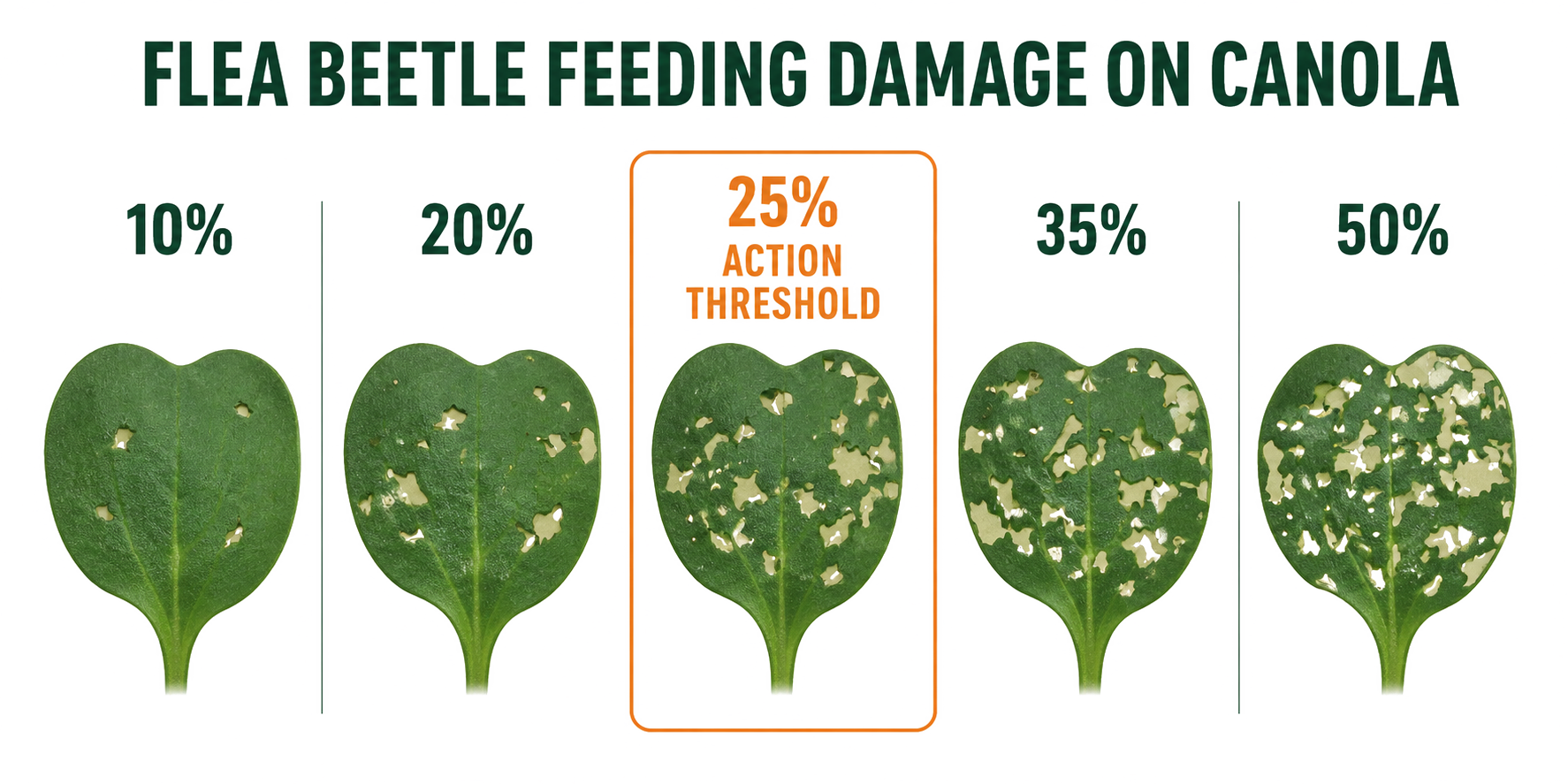
Scout for characteristic "shot hole" feeding on cotyledons and first true leaves. Flea beetles may also feed on stems under cool, windy conditions. High insect pressure and heavy feeding can destroy the growing point, resulting in plant death. Feeding activity increases during warm, sunny, and dry conditions. Canola crops that emerge slowly or have thin, uneven stands are more susceptible to flea beetle damage and may be at greater risk of yield loss. The spraying threshold is 25% defoliation. If spraying is required, reach out to a UFA team member to identify the best choice for control. Regular scouting and monitoring for flea beetles will help protect canola yield and stay ahead of damage during the critical early-season window.
Scout flea beetle damage in several places throughout the field, including field edges, field rows, and bluffs. Ideally at five points, in a "W" pattern, checking 10 plants at each point (to get a representative sample).
25% is the action threshold.
When approaching the 25% action threshold (nominal economic threshold), consider applying foliar insecticide if prior to the four-leaf stage with actively feeding flea beetles (evidence of fresh feeding wounds and/or damage to newly-emerged leaves) to prevent reaching irreversible damage from exceeding 50%.
Include the inspection of stems and petioles when flea beetle scouting. No specific thresholds exist to evaluate the impact of stem feeding, but due to the function of the stem (supplying water to the leaves) and its frail nature when actively feeding flea beetles are present, stem feeding can cause plant fatality (especially under hot and dry conditions).
Want this resource as a PDF?