Tips from the Field
Agronomy Update | Sclerotinia stem rot
Sclerotinia stem rot (white mold), caused by Sclerotinia sclerotiorum, is one of the most important canola diseases in western Canada when flowering coincides with wet, humid conditions. It can cause premature ripening, lodging and yield loss, especially in dense, high-yielding stands with a field history of infection.
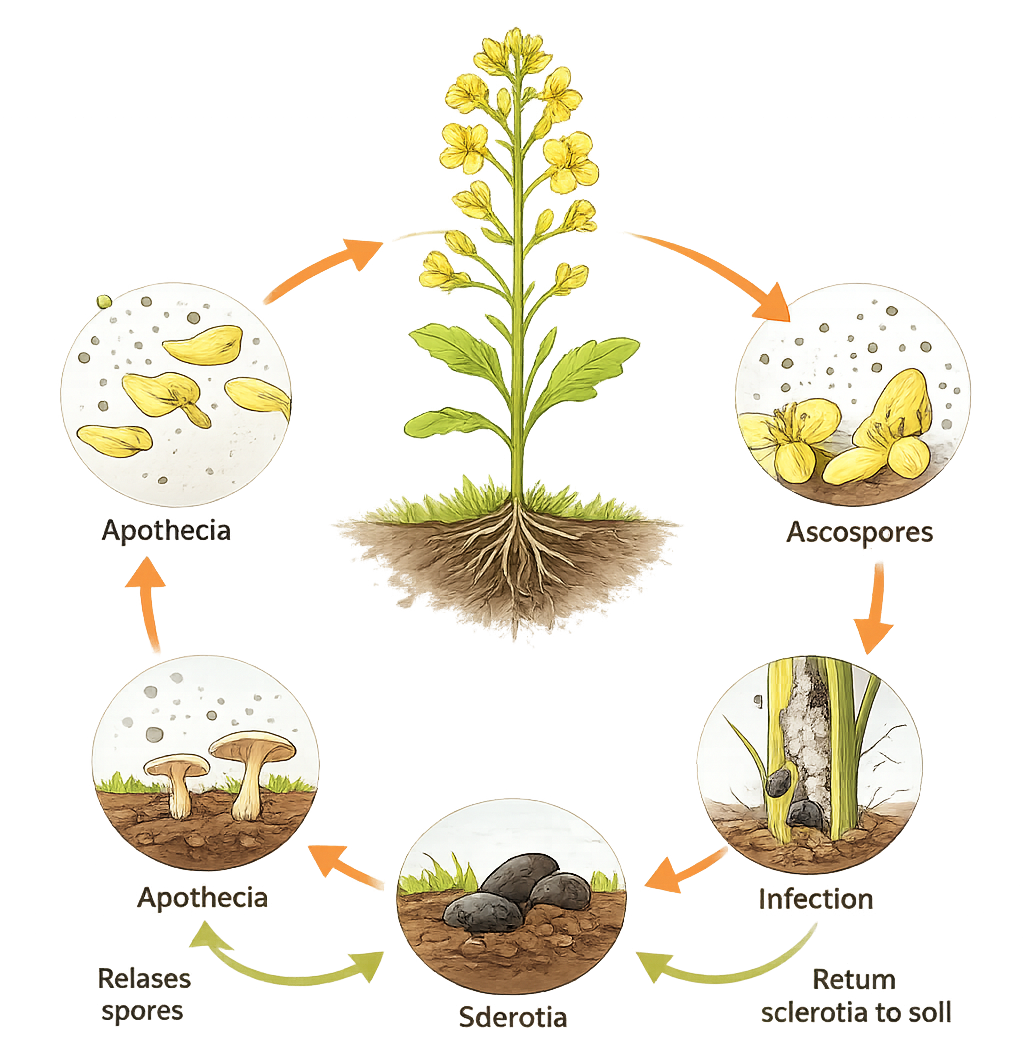
Disease Cycle
The pathogen survives for several years in soil and crop residue as hard, black fungal bodies called sclerotia. When soils remain moist, sclerotia germinate and produce small mushroom-like apothecia at the soil surface. These apothecia release airborne ascospores during flowering. Spores land on canola petals and use the petal as a food source to produce hyphae that penetrate the plant. When infected petals fall into leaf axils or on stems under moist conditions, the fungus invades those areas. By late season, new sclerotia form inside infected stems and return to the soil at harvest, completing the cycle.
Weather Conditions
Infection risk increases when canola flowers during prolonged moisture and high humidity. In general, sclerotia need saturated or near-saturated soil for about 7 to 10 days to germinate, and disease is favored by temperatures around 15°C - 25°C, especially between 20°C and 25°C, together with a dense canopy that stays humid. Frequent rainfall, prolonged leaf wetness, and humid conditions in the canopy during early to full bloom create the best conditions for apothecia formation, spore release and petal infection.
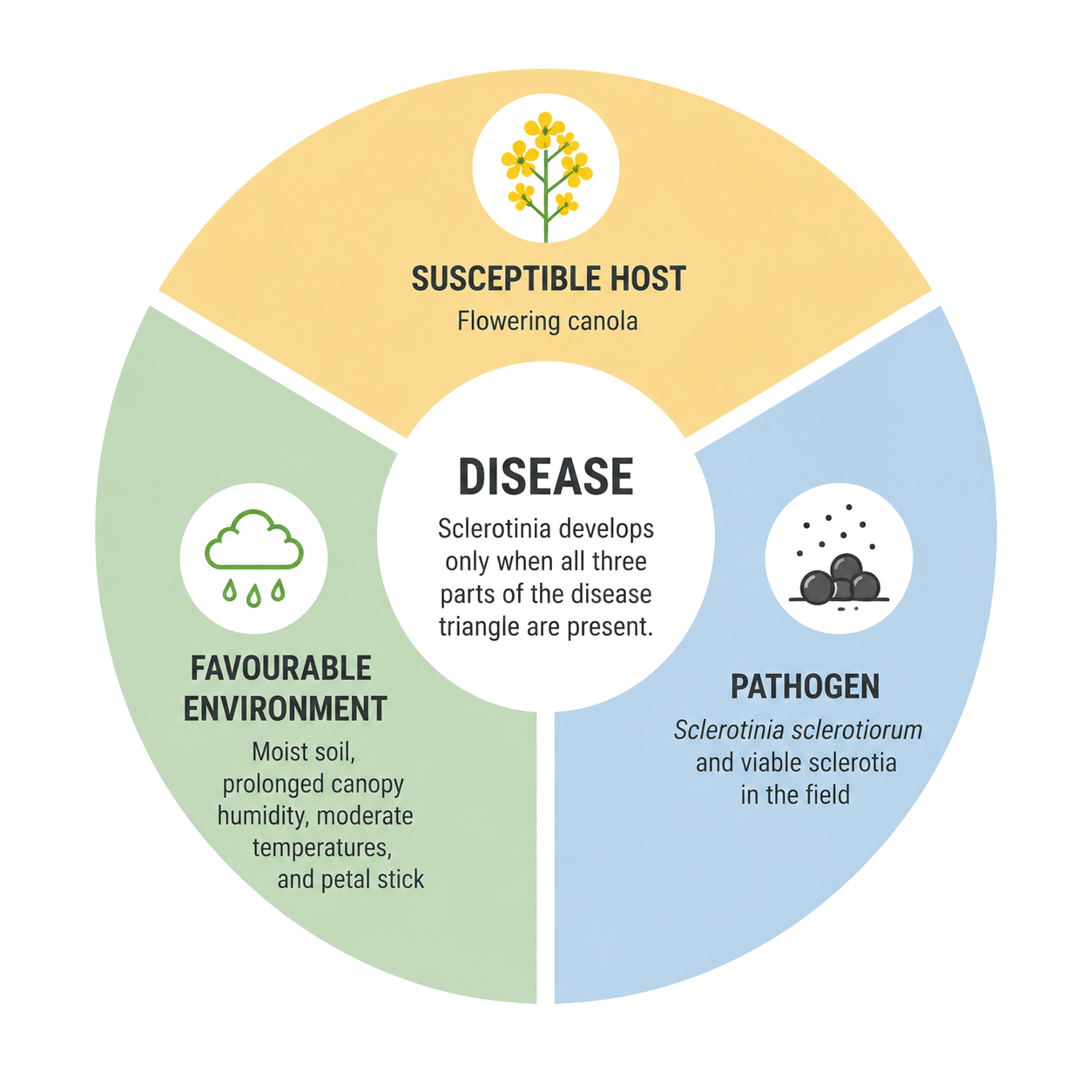
Application Timing
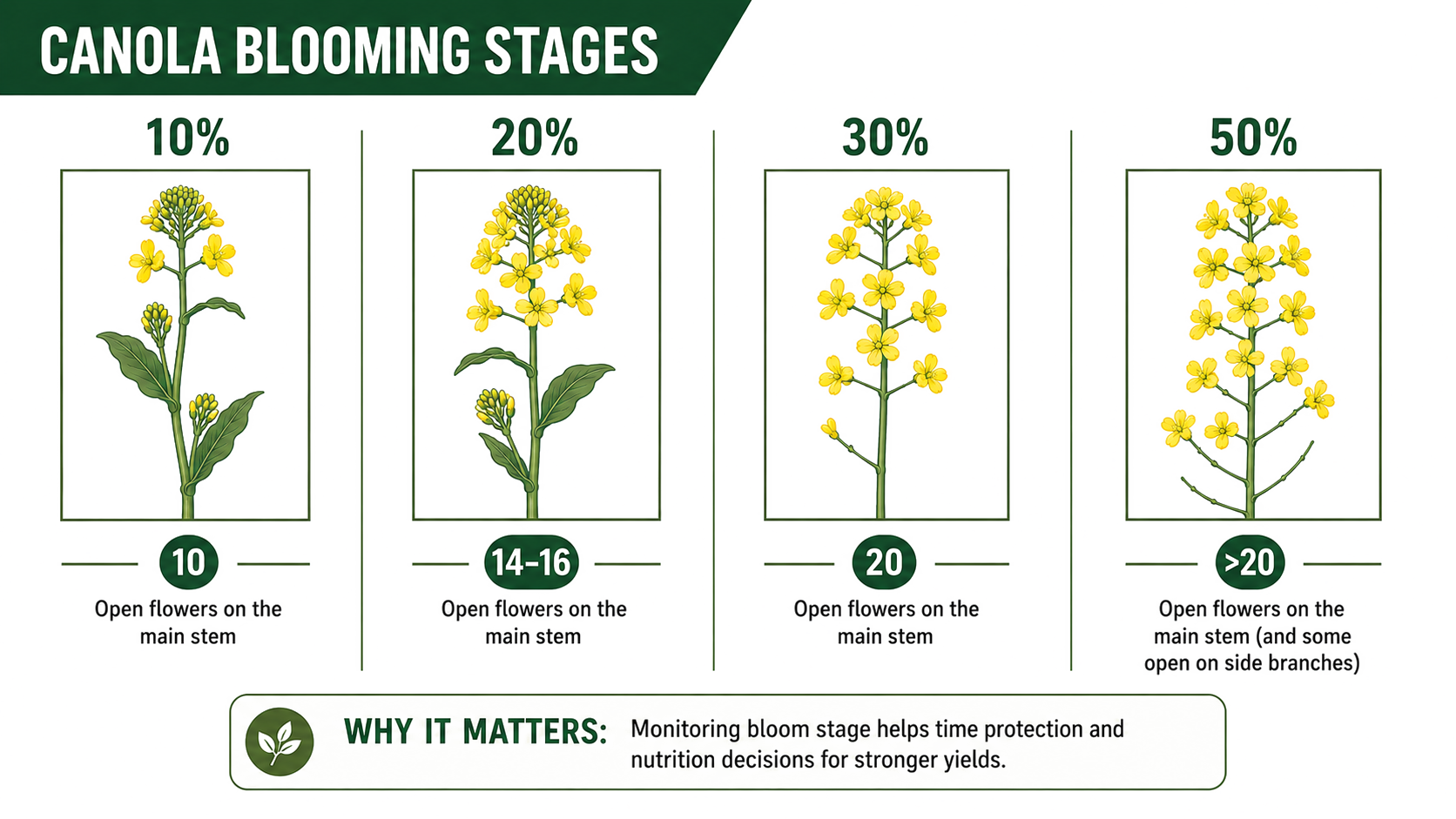
Fungicides for sclerotinia are protective, not curative, so they must be applied before significant infection occurs. The recommended timing in canola is generally 20% - 50% bloom, with the optimum often around 20% - 30% bloom when the majority of petals can be protected before petal drop. Correct application timing is important when there is high yield potential, a dense canopy, recent rainfall or humidity, and a field history of the disease. Use adequate water volume for canopy penetration, and if wet conditions persist through flowering, some fields may warrant a second application depending on product label and disease pressure.
Want this resource as a PDF?